Well pads, compressor stations, pipeline corridors, and tank batteries spread across large lease areas, often hours from the nearest service crew and beyond economic grid extension.
The power challenge
Operators maintain enormous fleets of battery-backed instrumentation — SCADA, tank-level monitoring, cathodic-protection readings, leak detection — where every deep battery discharge shortens service life and every dead battery means a truck roll.
Why current solutions fall short
Solar arrays lose output in winter, dust, and storm seasons, and open-blade turbines are rarely acceptable near process equipment, personnel, or classified areas. Grid extension to a single well pad is usually uneconomic.
Why enclosed micro-wind may fit
An enclosed rotor keeps rotating components behind a protective structure, which is a prerequisite — though not by itself a certification — for pursuing hazardous-location configurations. Supplemental wind charging is designed to reduce deep cycling on pad batteries and generate through the nights and storms when solar cannot.
Dust and industrialCold-weatherHazardous-location development configuration
Installation concept
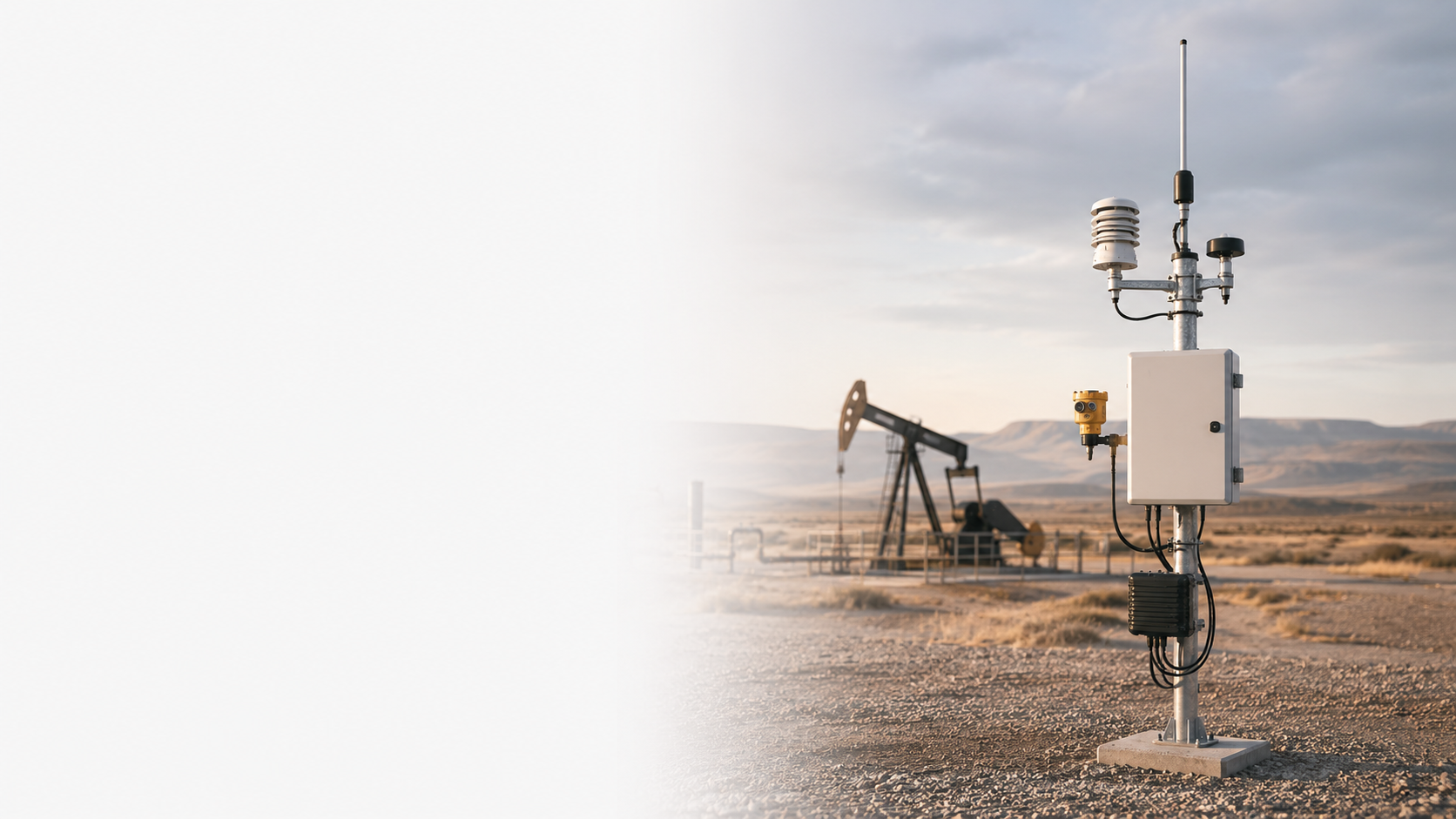
Pole- or skid-mounted units adjacent to existing instrumentation compounds, feeding the site battery bank alongside any existing solar. The supplied field rendering shows this arrangement above a remote sensor and control installation.
Important limitations
Hazardous-location suitability depends on the complete assembly — bearings, electrical components, surface temperatures, static charge, ingress, and failure containment — and on the certification status of the final configuration, not enclosure alone. Site classification review is required for every deployment.
Suitability requires project review. Performance figures referenced on this page are preliminary engineering estimates pending validation.
Operating in oil & gas?
Pilot programs are forming across Coevo's target industries.